Project description
In the NNATT project model research and experimental work is conducted to identify tunnel- and excavated material with sensor based classification and deep learning. Representative tunnel- and excavation material from Austria is sampled, mineralogically, chemically and geotechnically characterized, sensor based measured in preliminary tests and finally applied in a conceptual pilot plant for material classification at the Zentrum am Berg in Eisenerz. Additionally, the project focuses on opportunities for application in alternative building materials, resulting in saving of primary raw materials and the associated reduction of CO2 emissions.
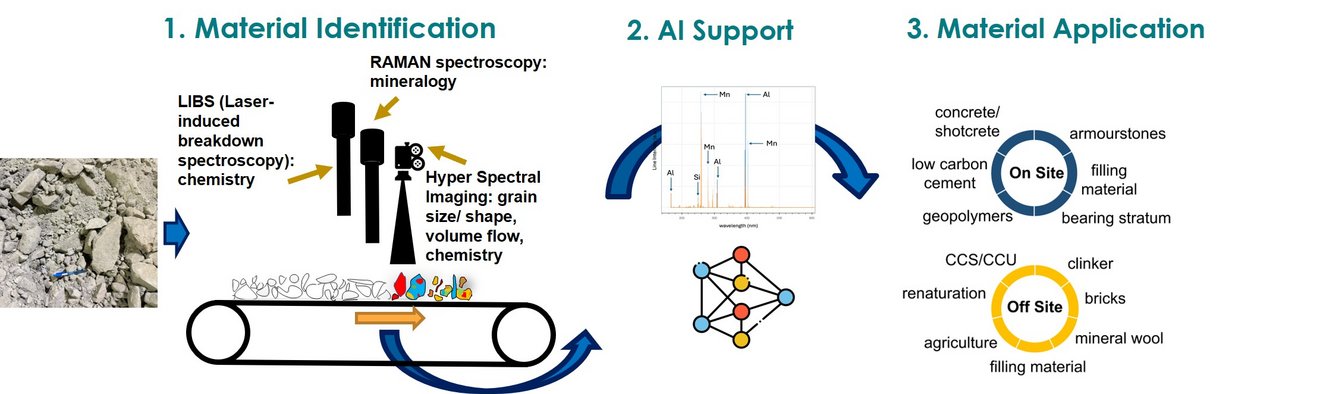
In 2021, 60 % of Austria's total waste are tunnel- and excavation material which accounted for around 46 million tons. Therefore, the NNATT project accomplishes
- Material Identification: the measurement of mineralogical, chemical and geotechnical material/rock properties on a conveyor belt,
- AI Support: an AI executes real-time material identification based on deep neural networks and
- Material Application: this cutting-edge technology enables to identify the resources potential of the material, facilitating efficient process in classifying and application both on-site and off-site.
The objectives of our project are fourfold: to conserve valuable primary raw materials in Austria by maximizing material reuse, to reduce the burden on landfills by minimizing waste disposal, to shorten transportation routes and to promote sustainable practices within industry and environmental management, for example construction industry and agriculture.