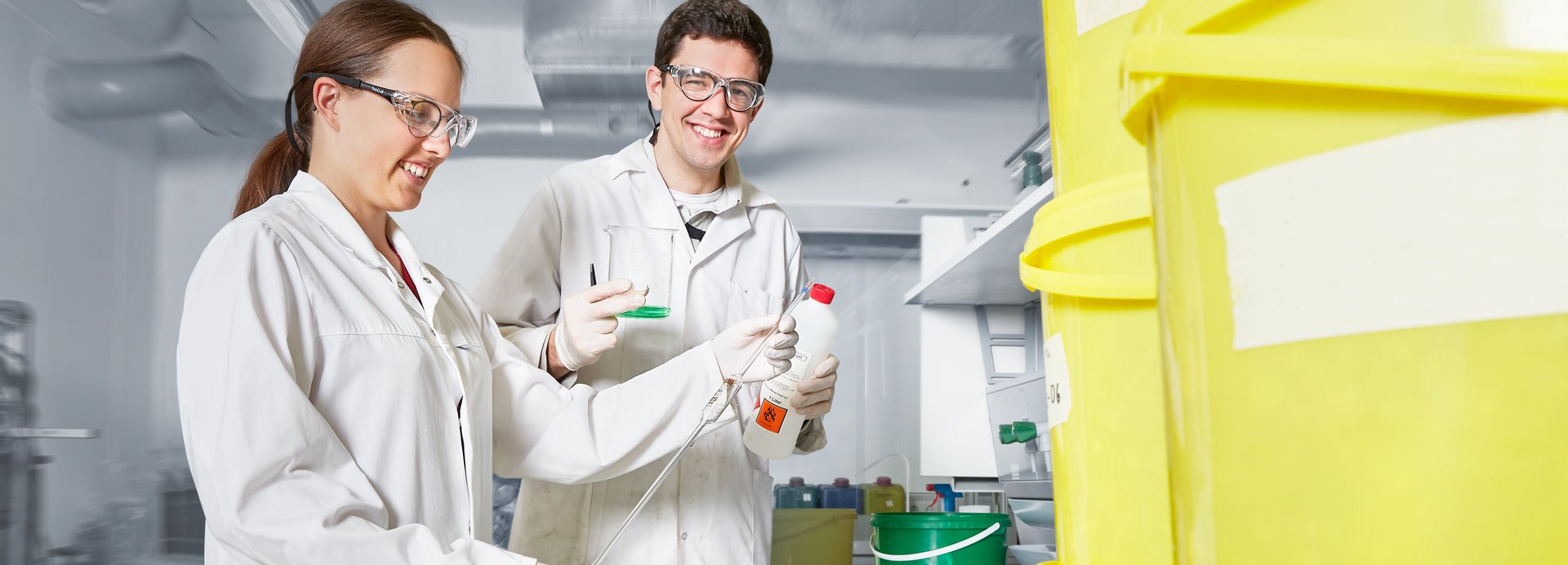
Working group "Environmental Remediation and Mineral Waste"
The thematic focus of the working group is on the development of further recycling routes for mineral residues, production residues, and wastes (e.g., ash, slag, construction waste, tunnel and excavation material, or mineral wool waste). Additionally, the research field of environmental remediation covers topics such as contaminated soils, groundwater, surface waters, landfills, leachate, and industrial wastewater.
The mobility of pollutants, which has a considerable impact on the environment and humans, plays a central role. In the area of recyclable materials, the focus is on their utilisation to generate new secondary raw materials, thereby increasing resource efficiency and promoting circular economy.
The aim of the working group is to apply interdisciplinary approaches to specifically identify recyclable materials and pollutants. Subsequently, these substances are separated from their substrates and/or immobilized to enable material flows to be fed into high-quality material recycling or to reuse contaminated soils. Innovative approaches are pursued for groundwater, surface water, and wastewater treatment to ensure contaminated water becomes safe for use again.
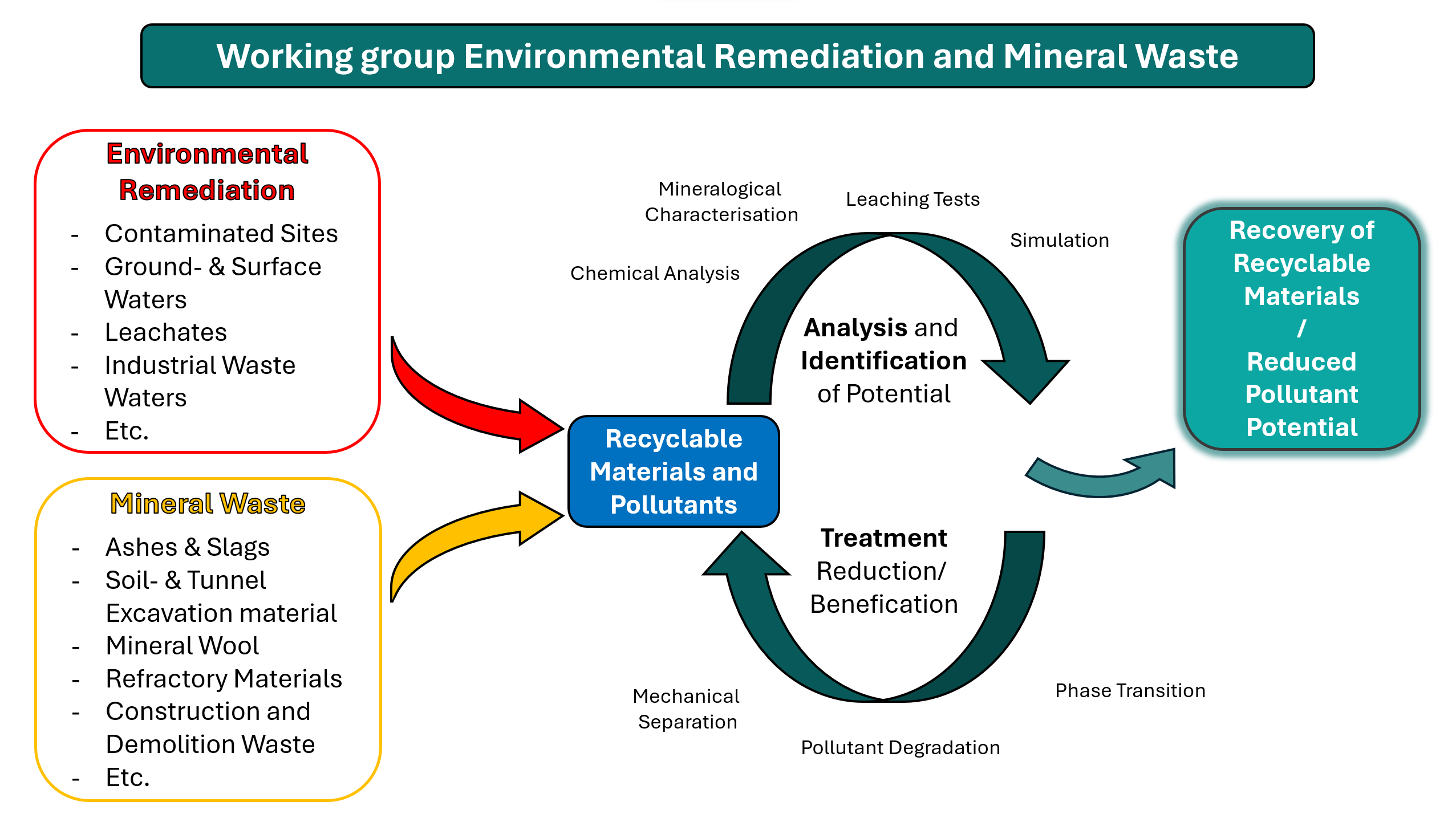
Schematic representation of the research area of the "Environmental Remediation and Mineral Waste" working group // Fotocredit: MUL/Sedlazeck
In our projects, recyclable materials and pollutants are fundamentally characterised using microscopic, spectroscopic, thermochemical, and hydrogeochemical methods. This includes investigations into the bonding type of individual elements and the incorporation of elements/substances into mineral phases. The results obtained are utilised to manipulate material flows in a targeted manner to minimise potentially negative environmental effects or maximise the potential of recyclable materials. Common chemical-mineralogical analysis methods or thermodynamic modelling in the area of water-solid interactions (dissolution and precipitation reactions) are implemented.
Theoretical approaches are tested, evaluated, and, if necessary, improved in laboratory and technical centre experiments wherever possible. Often, these approaches are then implemented in pilot plants. This approach allows for the development of customised, resource-efficient, and environmentally friendly solutions in close cooperation with participating industrial partners, as well as other research institutions in Austria and abroad.
| Project long title | Project short title | Project start |
| Sustainable Use of Tunnel and Excavation Material with Sensor Based Classification | NNATT | 2024 |
| Mechanical-thermochemical process combination for the recycling of fine fractions from waste treatment plants | MeteoR | 2023 |
| CO2-reduced binding agents through thermochemical conversion of mineral wool waste combinations | BitKOIN | 2023 |
| Waste-based geopolymer construction materials in the CO2-neutral circular economy | CD-Labor GECCO2 | 2023 |
| Refractory Sorting Using Revolutionizing Classification Equipment | ReSoURCE | 2022 |
| Project long title | Project short title | Project period |
| Innovationen for the thermally enhanced soil vapour extraction | InnoBLA | 2020-2024 |
| Evaluation of potential technologies for the reduction of CO2 emissions for the production of refractory materials | GreenRef | 2022-2023 |
| Recycling of synthetic mineral fibers | RecyMin | 2018-2023 |
| Mineralogy and leachability of steel slags 2.0 | MiLeSlag 2.0 | 2019-2022 |
Dr.mont., MSc
Philipp Sedlazeck
philipp.sedlazeck(at)unileoben.ac.at
Working field: Waste mineralogy, wastewater treatment, contaminated site/environmental remediation
Dipl.-Ing.
Paul Demschar
paul.demschar(at)unileoben.ac.at
Working field: Waste management, processing, biogenic waste, secondary raw materials
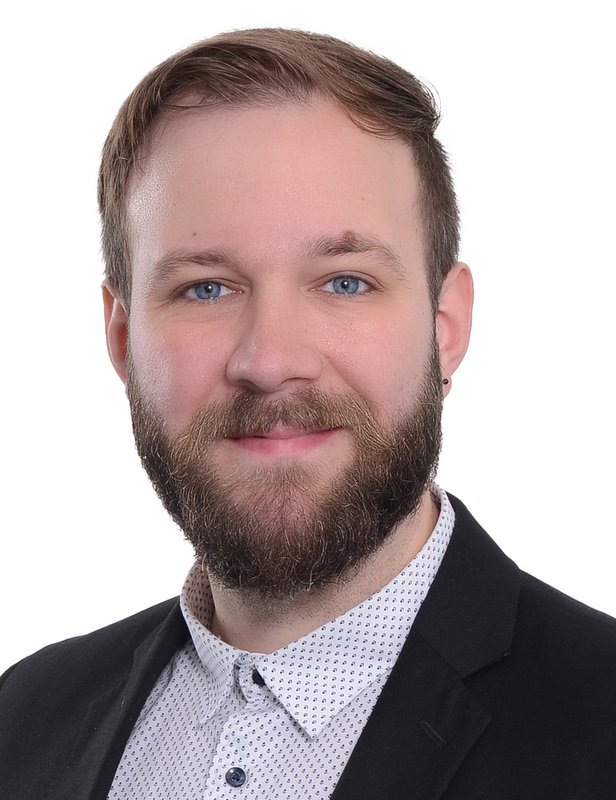
Dipl.-Ing.
Florian Feucht
florian.feucht(at)unileoben.ac.at
Working field: (Waste) mineralogy, chemical-mineralogical characterization of mineral waste, hydrogeochemical modeling, slag mineralogy
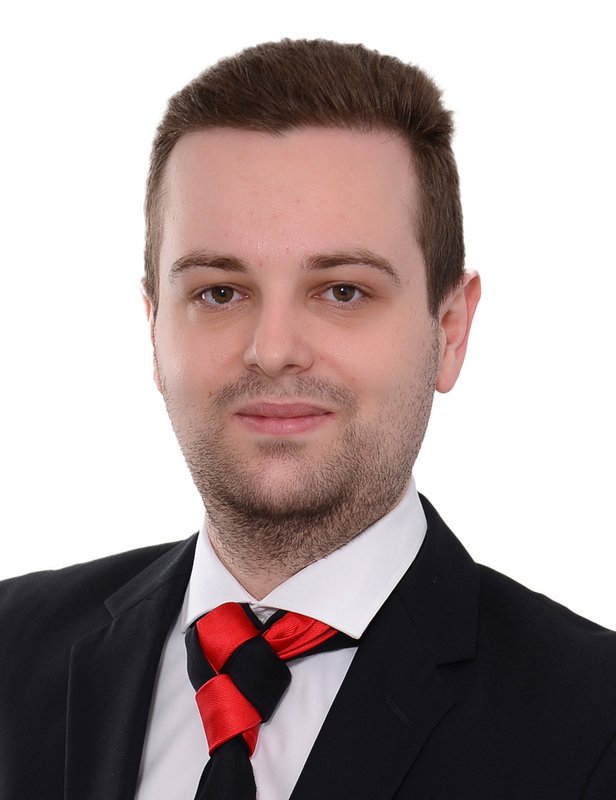
BSc MSc
Martin Findl
martin.findl(at)unileoben.ac.at
Working field: Applied mineralogy, geochemistry, hydrogeochemistry, petrology, stable isotopes
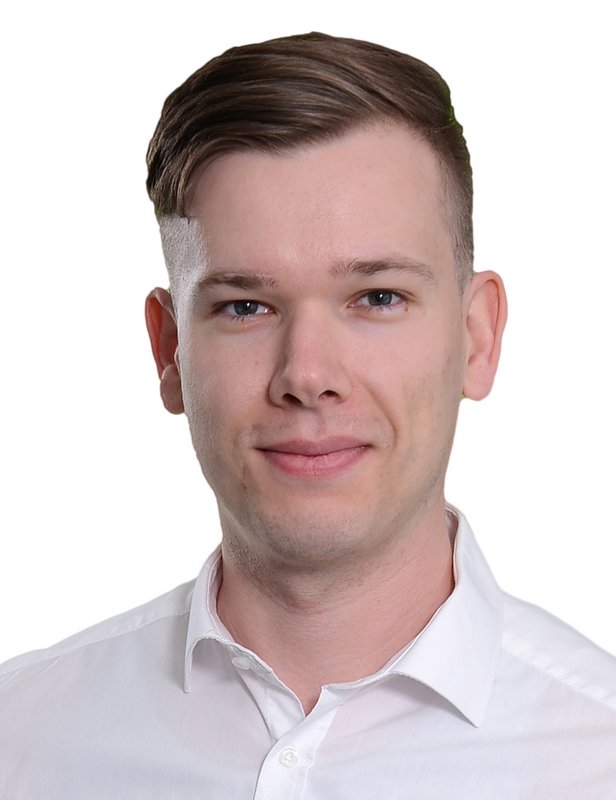
MSc
Thomas Kremlicka
thomas.kremlicka(at)unileoben.ac.at
Working field: (Waste) mineralogy, chemical-mineralogical characterization of mineral waste, crystallography
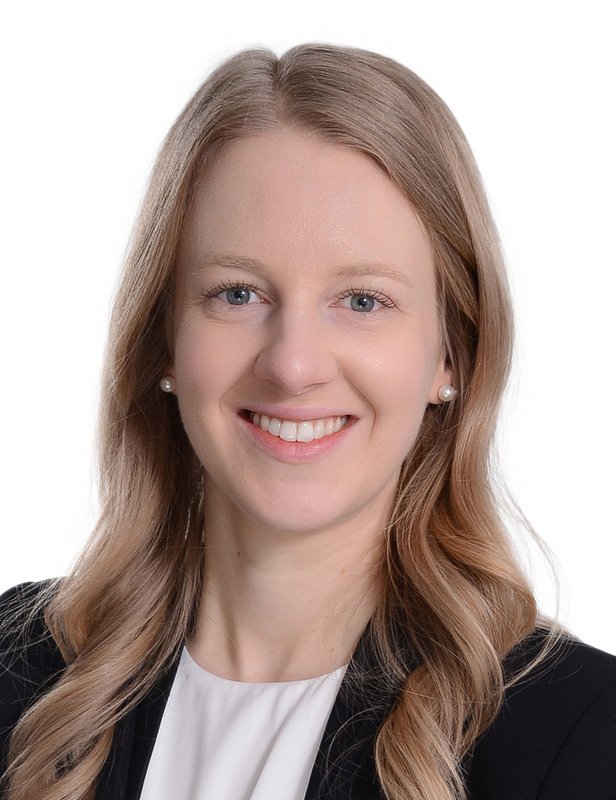
MSc
Alena Vydrenkova
alena.vydrenkova(at)unileoben.ac.at
Working field: Waste management, contaminated site/environmental remediation, life cycle assessment