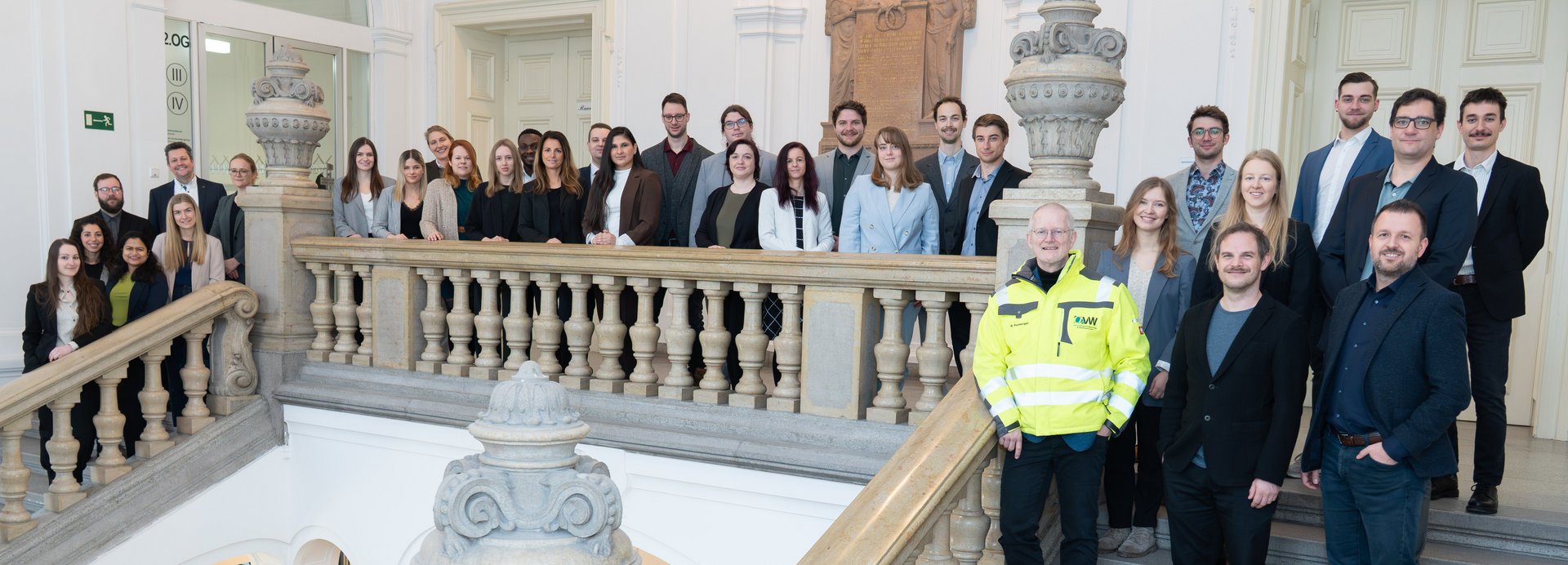
Long Night of Research (Lange Nacht der Forschung)
On Friday, April 24, 2026, the annual “Long Night of Research” (Lange Nacht der Forschung) took place once again.
Technical University of Leoben set a new attendance record with 1,114 visitors spread across 43 stations.
The AVAW was represented with 2 stations.
Interactive station: Recycling is pointless - it all gets incinerated anyway! Or does it?!
(Mülltrennen bringt nix - es wird ja sowieso alles verbrannt! Oder vielleicht doch?!)
We discussed waste sorting with the visitors. To illustrate this, we set up a table displaying everyday waste items (egg cartons, yogurt cups, banana peels, batteries, glass bottles, clothes hangers, etc.). The participants had to sort the waste into the correct bins. The children especially enjoyed this, and it even gave the adults something to think about (keyword: non-packaging made of the same material). We then discussed the respective recycling pathways for each waste stream (trash bin) and noted that there is a separate recycling system for every type of waste, with specialized facilities that each have their own requirements for the incoming waste streams (e.g., regarding contaminants). This made it clear to everyone involved that waste separation makes sense. Afterward, our student assistant Martin Schneiderbeck provided an insight into the mechanical processing procedures at waste treatment facilities. To do this, he demonstrated our mini-aggregates and used them to separate magnetic materials, screen the waste, sort it by shape (flat/hollow), and separate different types of plastic.
Here is the official description of this station.
(Unfortunately, the page is only available in German)
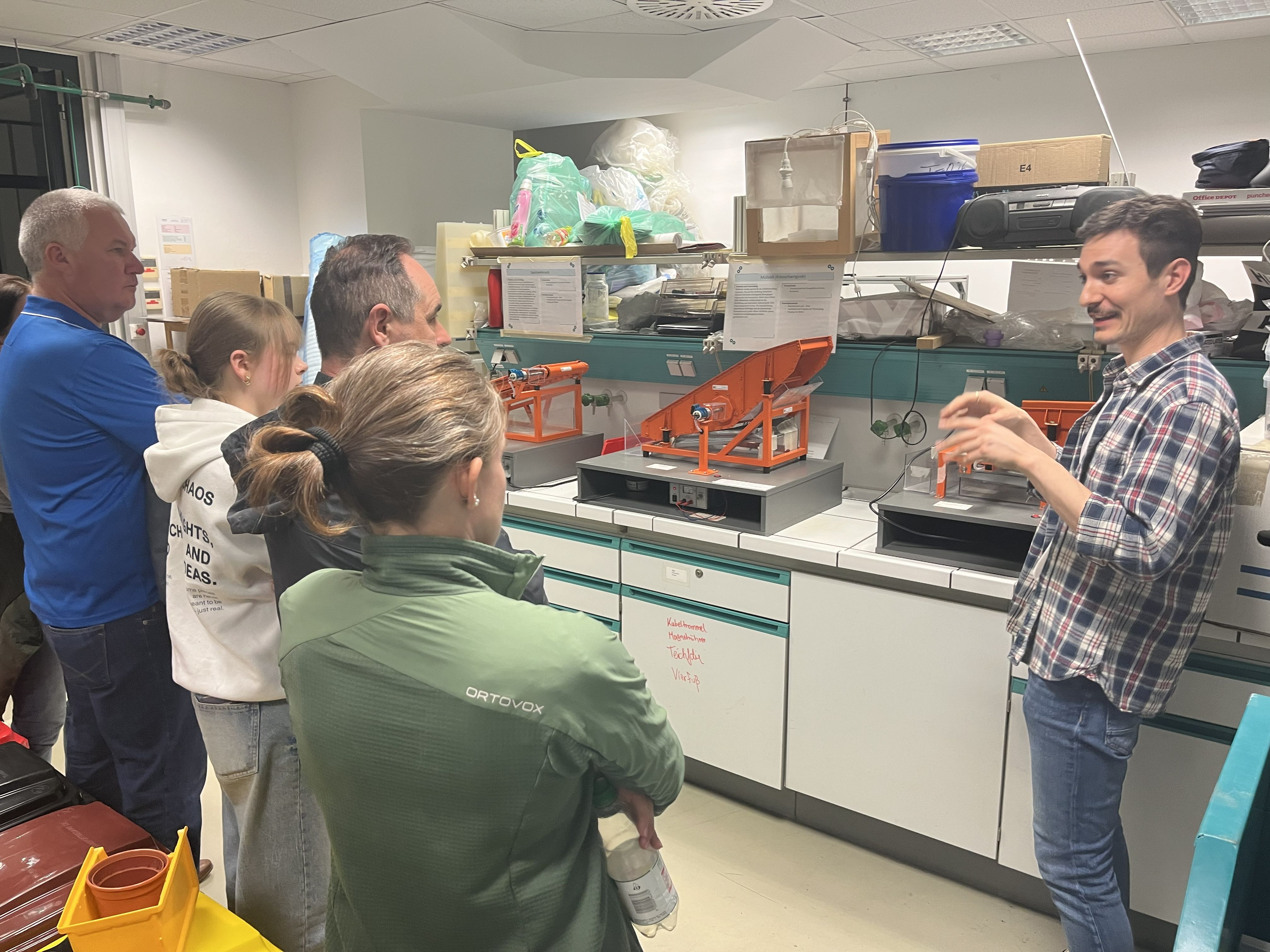
Martin Schneiderbeck introduces our mini-aggregates // Fotocredit: MUL/AVAW
Interactive Station: Fashion's Afterlife - What Happens to My Clothes in the Trash?
(Fashion's Afterlife - Was passiert mit meiner Kleidung im Müll?)
Textiles are an integral part of our daily lives. But what happens to them when we dispose of them? At this station, we joined visitors in taking a fascinating look behind the scenes of our textile consumption, showing how clothing becomes waste and what impact this has on the environment and our resources. In an interactive workshop, we invited participants to get involved and work together to discover solutions for a sustainable textile circular economy. In addition, participants learned about current analytical methods as well as sorting and recycling processes on a laboratory scale and gained exclusive insights into research projects conducted by the AVAW.
Here is the official description of this station.
(Unfortunately, the page is only available in German)
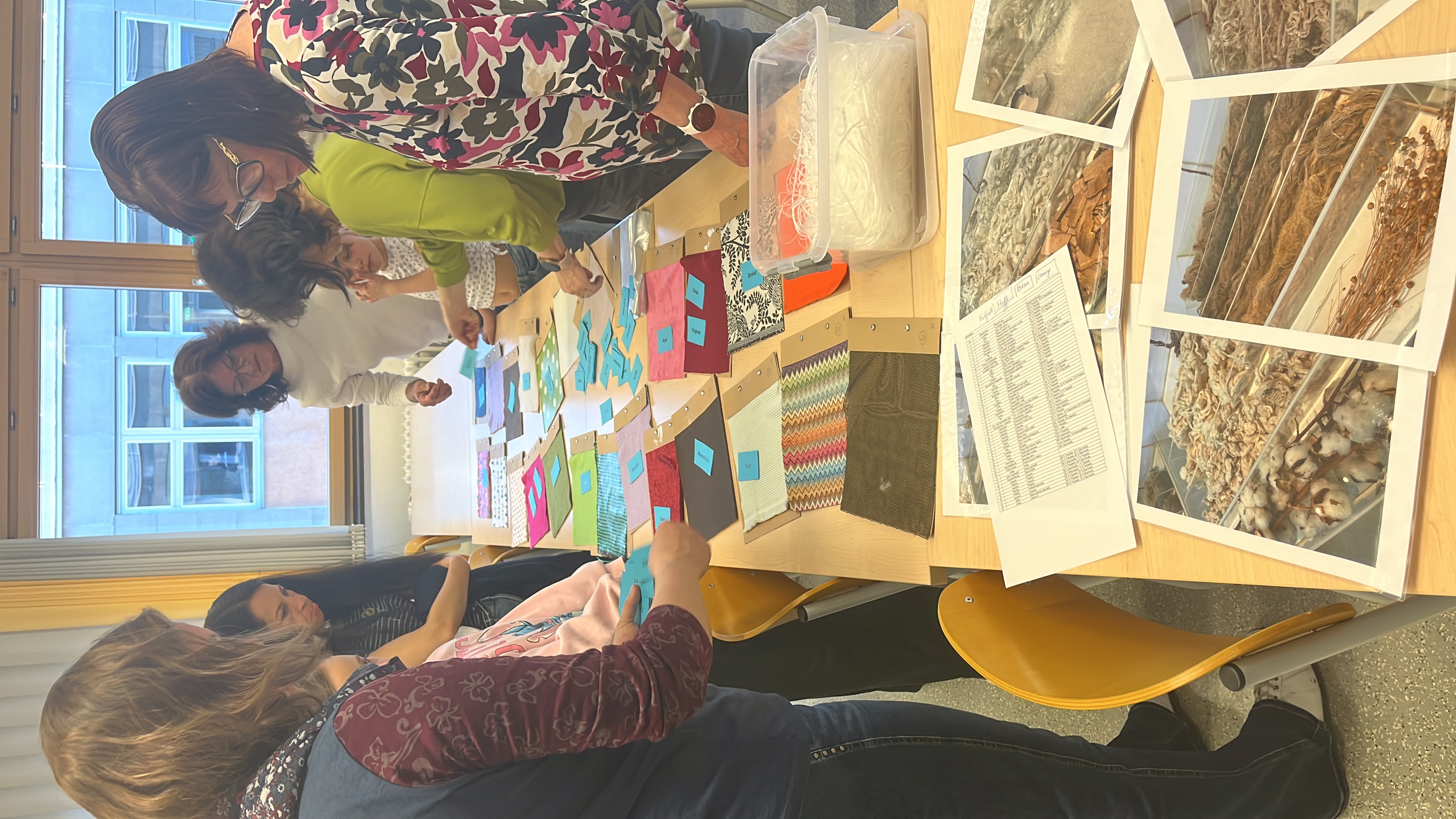
Visitors “try” to identify the types of textiles // Fotocredit: MUL/AVAW