Author: Thomas C. Meisel
Abstract
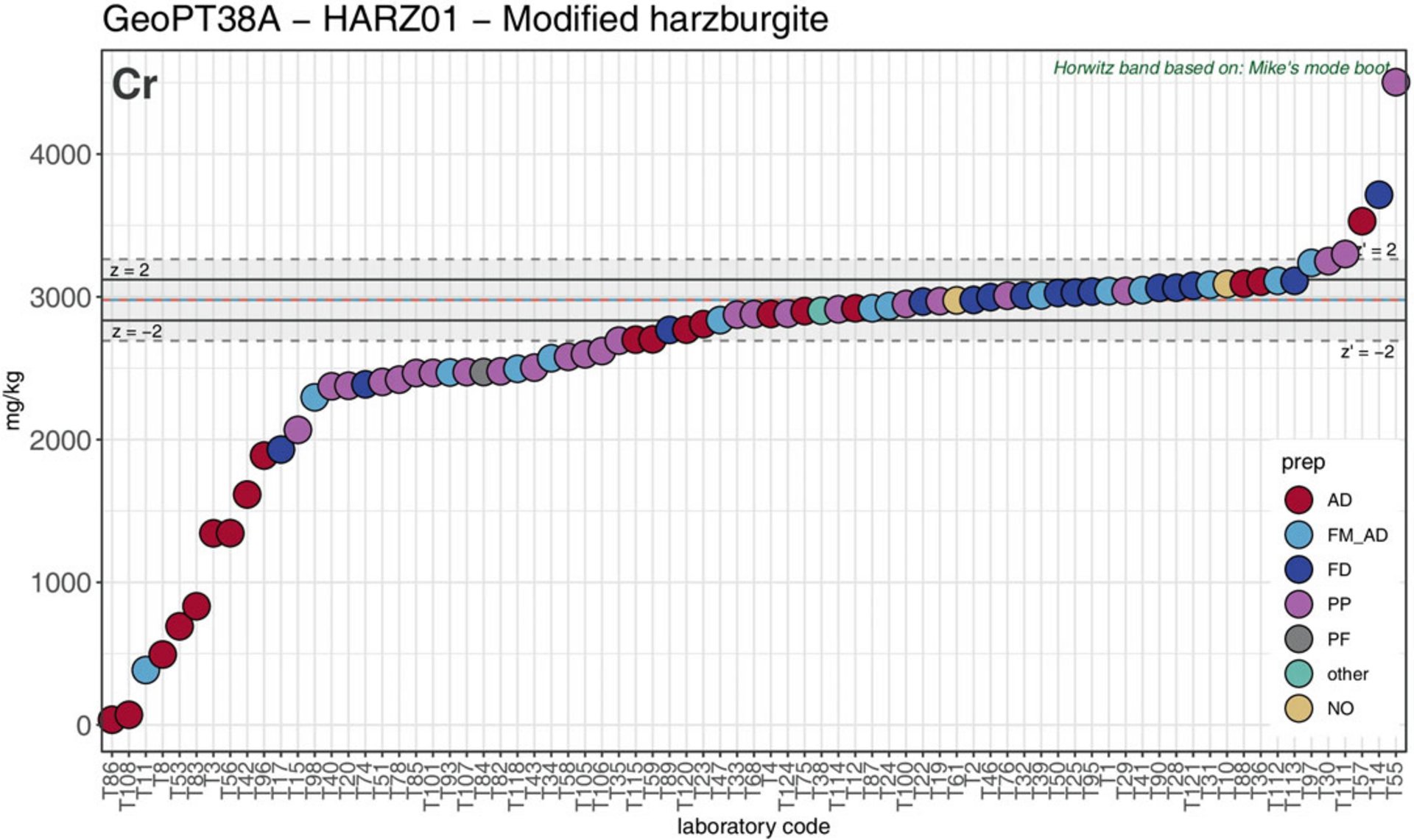
A biased analytical result rarely announces itself—it looks exactly like a correct one, until it feeds into an ore-grade estimate, a smelter feed calculation, or a metallurgical balance that turns out wrong. Proficiency testing exists precisely to catch this kind of hidden error before it reaches production decisions. Using 75 rounds and more than 228,000 individual results submitted over 30 years to the GeoPT programme of the International Association of Geoanalysts, this article identifies the analytical failure modes that most often distort rock and ore analysis in both research and routine analytical laboratories: incomplete digestion of refractory minerals such as zircon and chromite, sample-preparation bias in X‑ray fluorescence (XRF) analysis, calibration outside the validated working range, misuse of detection and quantification limits, over-rounding of reported values, and matrix effects in unusual materials such as mineralized rocks. These are not isolated laboratory mistakes; they are recurring, community-wide weaknesses that only become visible through independent interlaboratory comparison. This article translates each failure mode into its practical consequence for metallurgical operations—misestimated ore grades, incorrect mass balances, disputed commercial assays—and give concrete, low-cost corrective actions for laboratory staff and for those who commission or rely on analytical data. GeoPT demonstrates that proficiency testing is not an academic exercise but a direct line of sight into the reliability of the numbers that metallurgical decisions are built on.
https://link.springer.com/article/10.1007/s00501-026-01775-w