ZIP phases, short for “zigzag intermetallic phases,” are a new class of materials defined by their unique atomic arrangement. They exist in two structural variants: a cubic diamond structure and a hexagonal nanolaminate structure. Due to their duality, these materials combine metallic behavior, ionic bonding, and distinctive zigzag atomic patterns in a remarkable way. “The discovery of the ZIP phases marks the beginning of an entirely new ecosystem of nanostructured materials,” explains Ass.-Prof. Matheus A. Tunes, first author and principal investigator of the project.
Successful synthesis and new perspectives
Using advanced powder metallurgical synthesis, Tunes and his team have now successfully synthesized ZIP phases in several ternary systems. A major breakthrough was the scalable synthesis of nearly phase-pure ZIP compounds in the Nb–Si–Ni system. This paved the way for in-depth structural and property-related characterization.
The study highlights that ZIP phases are structurally comparable to the well-known MAX phases, but extend this concept much further across the periodic table. The Computational studies presented in the paper also suggest that ZIP phases may be exfoliated into 2D derivatives, offering potential for flexible electronics, magnetic sensors and a wide variety of other applications. The team's findings not only validate earlier predictions in materials science of nanostructured materials, but also open up entirely new directions for interdisciplinary research.
The [X-MAT] team is currently establishing international collaborations with several research institutions and universities for producing ZIP phases and measuring their properties.
About the author
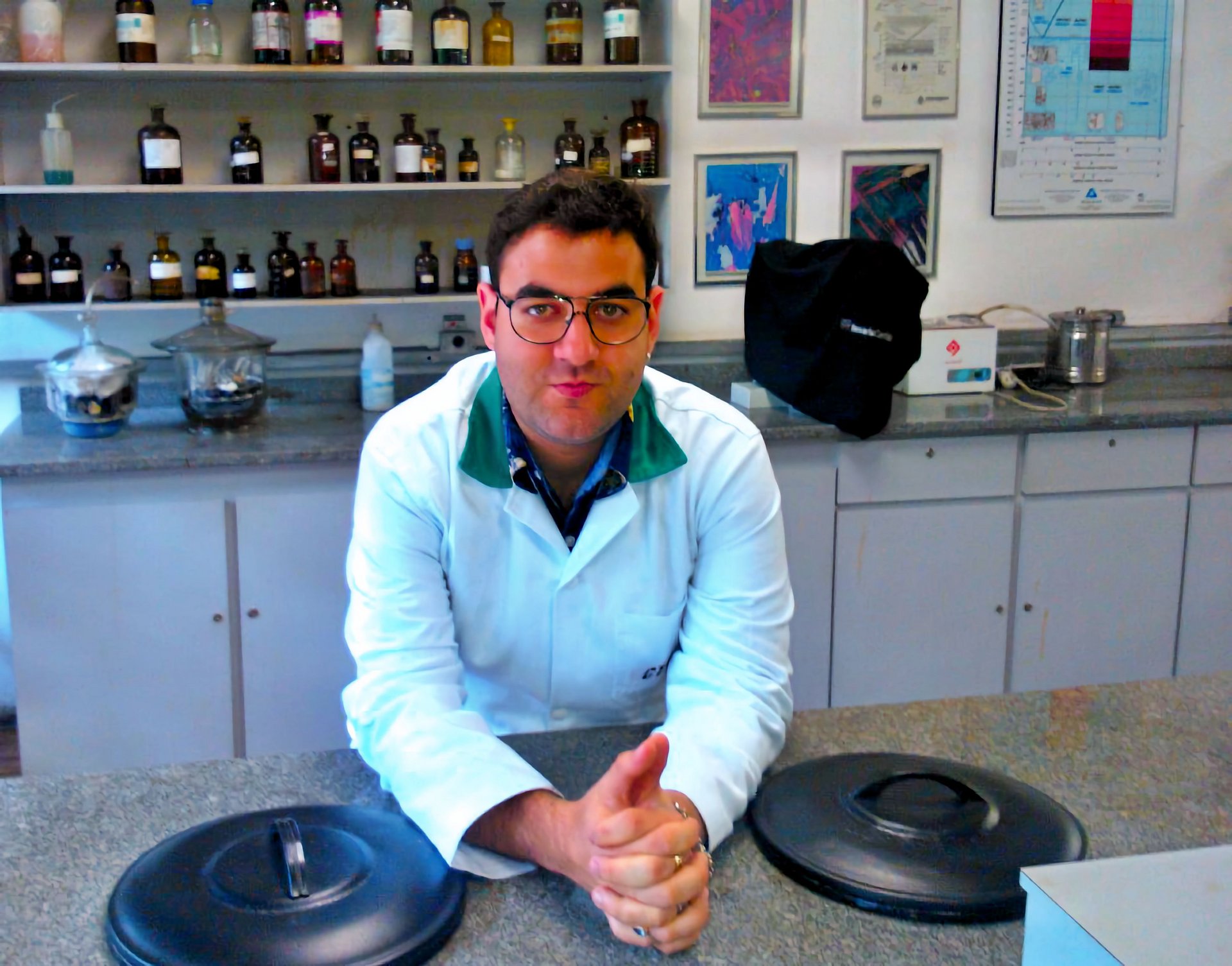
Matheus A. Tunes began his scientific career at the University of São Paulo (Brazil), where he completed his bachelor’s degree in physics and his master's degree in materials science and metallurgy. He wrote his dissertation at University of Huddersfield in the UK and at the Oak Ridge National Laboratory in the USA, before joining the Technical University of Leoben as a postdoctoral researcher in 2019. During this time, he developed the idea of producing MAX phase-like materials without carbon or nitrogen – an idea that wound later evolve into the ZIP phase concept. After an appointment as Director’s Fellow at the Los Alamos National Laboratory (USA) the scientist has been since 2023 an assistant professor at the Chair of Nonferrous Metallurgy at the Technical University of Leoben and head of the [X-MAT] laboratory.
Access to the article: https://doi.org/10.1002/adma.202308168.
Contact:
Ass.-Prof. Matheus A. Tunes, BSc MSc PhD MinstP
Chair of Nonferrous Metallurgy
Technical University of Leoben
phone.: +43 3842 402 – 5236
e-mail: matheus.tunes(at)unileoben.ac.at
website: https://x-mat.unileoben.ac.at