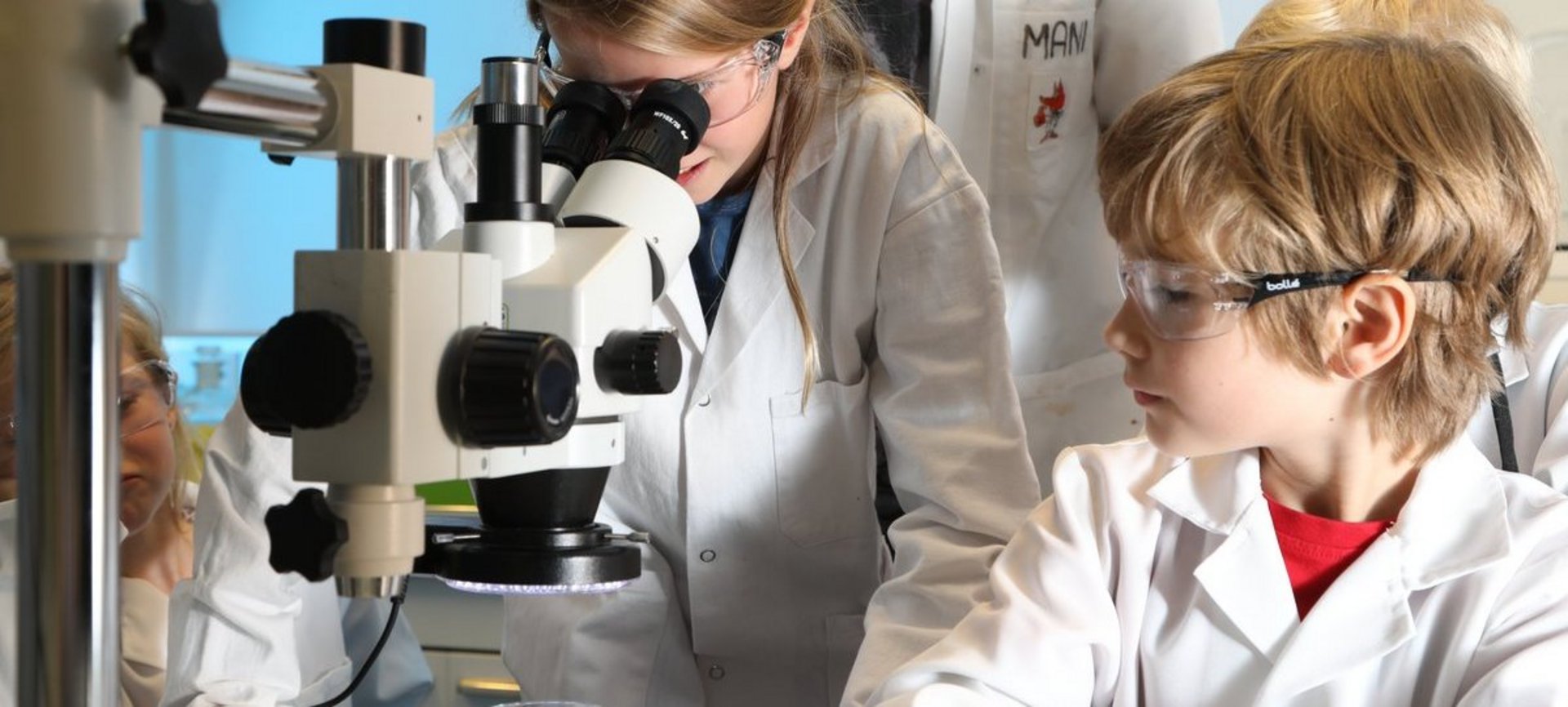
Sparkling Science funding project "Once upon a time..."

Children explore the future of Lower Austria's mineral resources
The Leoben Teaching and Learning Laboratory and the Chair of Geology and Mineral Deposits, headed by Professor Frank Melcher, will be partners in a Sparkling Science funding project led by the University College of Education Lower Austria (PH NÖ) starting in autumn 2022: In "Es wird einmal ..." (Once upon a time ...), children and teachers from six primary schools will work together with PH NÖ, the Montanuniversität, the Institute for Design Research Vienna (IDRV) and the Ludwig Boltzmann Society - Open Innovation in Science Center to research the future of domestic mineral resources. The project is funded by the OeAD, the Agency for Education and Internationalisation of the Federal Ministry of Education, Science and Research (BMBWF). Among other things, the project aims to create a new experimental workshop on the topic of "graphite" for the teaching and learning laboratory.
Telling stories about recyclable materials for futures in the Anthropocene
"Fairy tales in their material contexts form the starting point for the 'Es wird einmal ...' (Once upon a time ...) project, which explores material cycles and usage contexts with primary school pupils, harnessing the potential of storytelling to shape the future," explains project leader Prof. Dr. Robert Kamper (PH NÖ). “The soil is a treasure that should not only be extracted (as a resource) but also sustainably maintained (as a recyclable material). Plastic products do not increase plastic waste but are reused as recyclable materials. What new narratives does circular thinking generate when it views the biosphere as a model for the technosphere? What images help to tell the life (cycle) stories of regional raw materials as sustainable recyclable materials from this new perspective of the circular economy? How do they prove themselves as a new form of science communication?”
In the co-creative process of the "Future Workshop", primary school pupils act as citizen scientists, exploring the material resources in fairy tales from around the world and creating multimodal material stories. This results in narratives about the future, the evaluation of which provides insights into futures literacy: the ability to shape the future as a key competence of the 21st century. With this educational programme, UNESCO aims to empower all people to develop strategies for coping with an uncertain future in the face of climate change. The Anthropocene concept supports this perspective: in the intertwining of nature and culture, it understands humans not only as a geological factor, but above all as participants in interdependent networks.
Natural and technical material cycles are explored from the perspective of children's everyday lives. The focus is on shifting perspectives towards a circular society and integrating this into teaching and learning processes. The potential of circular narratives for science communication is explored using the example of stories about recyclable materials. Opportunities for shaping the future in participatory processes in the school context are explored. The children's narratives about the future allow conclusions to be drawn about the defining criteria of futures literacy, such as imagination, anticipation, creativity, value retention, dealing with complexities and enthusiasm for innovation. Their stories about recyclable materials tell of possible futures in the Anthropocene.
Six primary schools, six mineral resources
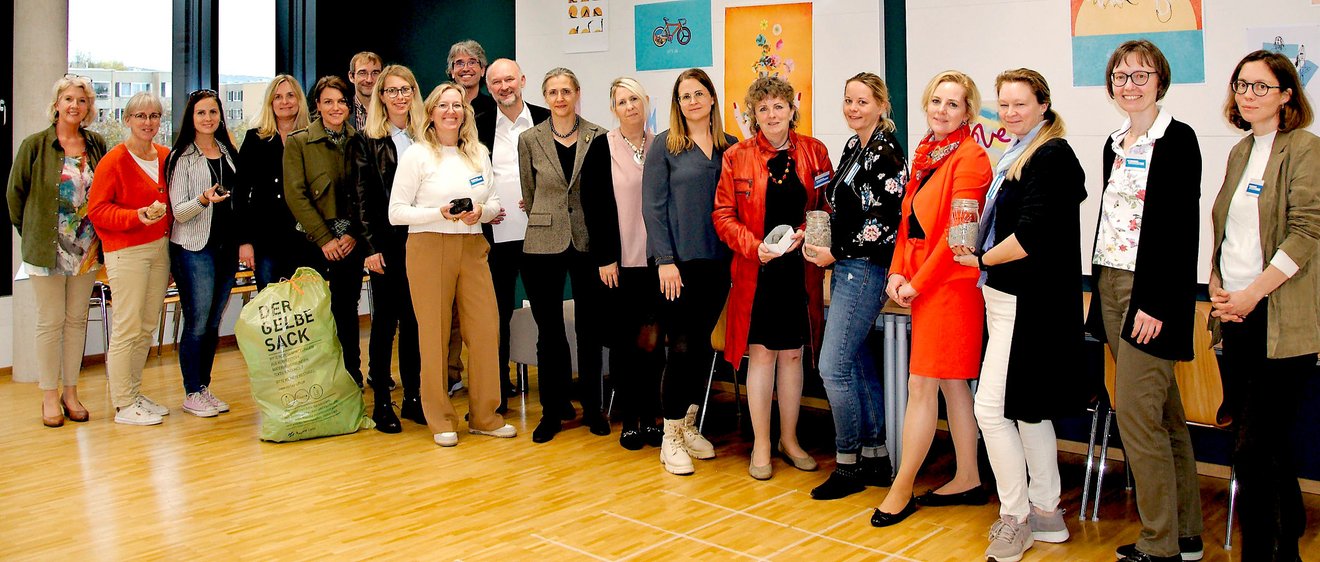
The project was officially launched at a kick-off meeting in Baden at the end of October 2022. Prof. Melcher emphasised that Austrian graphite reserves are regaining importance for battery production. The children involved in the project would gain experience at a young age that students often only acquire during their first years of study.
Headmistress Susanne Dutter presented the Bad Fischau-Brunn primary school's project with pebbles she had brought with her. Elisabeth Ecker is headmistress of the Weikersdorf/Steinfelde and Hohe Wand primary schools: her pupils are exploring the history and future of marble and charcoal in the region. The children at Grünbach primary school are researching hard coal. Headmistress Petra Hauser-Luef presented the importance of the raw material for the town with a piece of hard coal. Rita Aichholzer from the Sankt Valentin - Hauptplatz primary school travelled to the Baden campus of the PH NÖ with a yellow bag. The children are researching the plastics processing industry in Sankt Valentin and the possibilities of a "plastic-free community". Teachers Gerda Hochsteiner and Eva Schmidt are looking forward to inspiring children with research. Resource-conscious behaviour is a topical issue for children. Beatrix Hengstberger, headmistress of the Drosendorf primary school, presented the value of pencil leads with graphite from Zettlitz.
From fairy tales about cycles to the future
The research project will kick off in autumn 2022 with a playful, child-centred "fairy tale workshop" presented by Prof. Babette Lughammer MEd (PH NÖ): The seven dwarfs mine coal, Rumpelstiltskin spins straw into gold, and the king's daughter knows that salt is more valuable than gold and precious stones. Through stories, the children learn about the value of the raw materials from this fairy-tale treasure chest. In the "recycling workshop" (MUL, IDRV), schools deal with raw materials as recyclable materials and the importance of a recycling culture. They gather knowledge about the materials: the schools visit storage facilities and conduct interviews with experts. This teaches the children about processing methods. Finally, they create new stories in the "Future Workshop" (HS-Prof. Dr. Carmen Sippl, PH NÖ).
Families and communities also participate in the research project as "citizen scientists". With facts instead of fakes, it is not only the children who recognise the magic of reality, emphasised PH Rector Univ.-Prof. DDr. Erwin Rauscher: "Demystifying in the classroom is enchanting for life!" And if they were not recycled, then they are still alive today...


